
How to Check Criminal History in Louisiana
Begin with the Louisiana record question, not a person’s name. A recent Louisiana booking belongs with the parish jail or arresting agency. A filed charge, minute entry, judgment, or certified disposition belongs with the clerk of the Louisiana court that heard the case. A current Louisiana custody question goes to Louisiana Department of Public Safety and Corrections, Corrections Services, while registration status belongs in the Louisiana State Sex Offender and Child Predator Registry. Your own fingerprint-linked Louisiana rap sheet comes from Louisiana State Police BCII through Right to Review.
The official Louisiana portal and agency directory provides a useful statewide starting point. The view below shows the state portal used to reach Louisiana agencies and services.
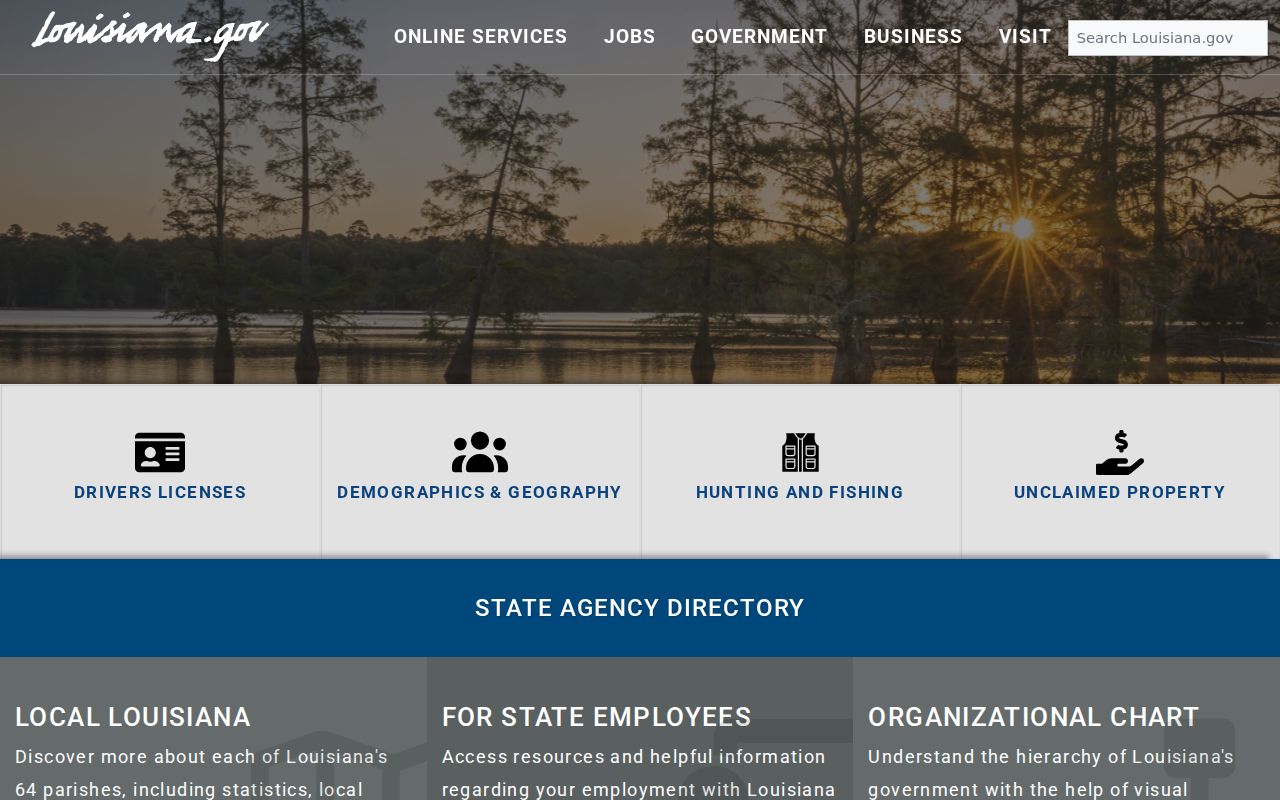
That directory helps identify the agency, but the original criminal record still controls. Follow a clear sequence:
- Identify the Louisiana event type and the parish where it happened.
- Use Right to Review for your fingerprint-based Louisiana repository record.
- Check the Louisiana parish clerk for filed charges, minutes, outcomes, and certified copies.
- Use the sheriff, police department, or jail for arrest, incident, booking, and local custody material.
- Compare names, dates, case numbers, charges, and dispositions before drawing a conclusion.
Why Louisiana LACCH Stays Closed
Louisiana Computerized Criminal History, or LACCH, is not an anonymous public people-search database. Louisiana Revised Statute 15:587 limits dissemination to criminal-justice agencies and other agencies with specific legal authority. Approved users enter through the Louisiana State Police Internet Background Check gateway. Individuals use the fingerprint-based Right to Review process under R.S. 15:588 to inspect their own Louisiana criminal history.
This Louisiana closed-repository rule does not close every source record. A public booking summary, filed bill of information, nonrestricted court minute, or releasable initial police report may still be available from its Louisiana parish custodian. The distinction matters: LACCH is a compiled, fingerprint-supported Louisiana record; the local file is the source document. A missing LACCH result does not certify that no Louisiana event exists.
Louisiana State Police publishes separate contact routes for its sections. The LSP contact directory shown below helps direct a question to the unit that actually handles it.
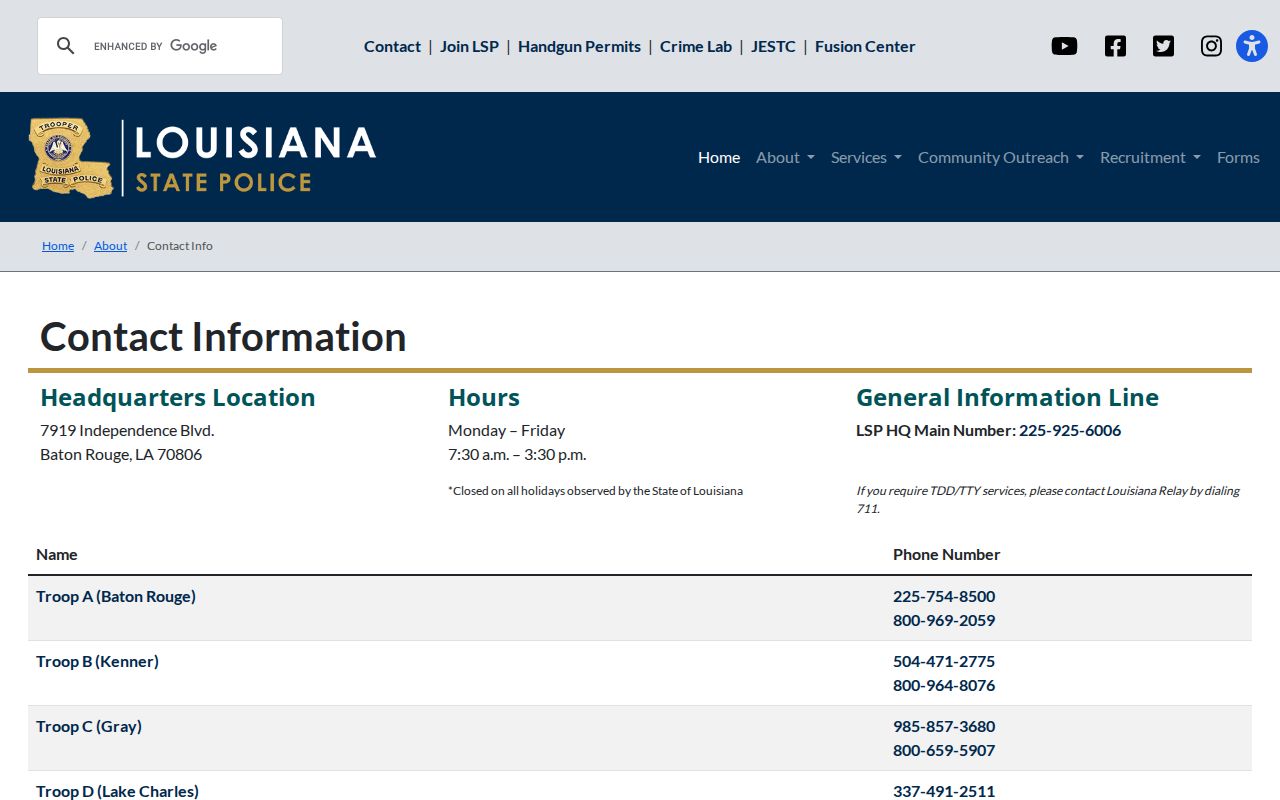
Use Louisiana BCII for repository review and correction, then return to the originating Louisiana parish when a source document is needed.
Note: Never borrow an agency code or treat authenticated LACCH access as a public search option.
The Louisiana Criminal History Repository
Louisiana State Police BCII sits within Public Safety Services under the Louisiana Department of Public Safety and Corrections. BCII-LCJIS manages the state criminal-history function. Fingerprints are its identity spine. Livescan and ink-card submissions create or match an AFIS identity, after which Louisiana arrest cycles and reported dispositions can be assembled in LACCH. The system also holds probation or parole bookings and incarceration information reported into the repository.
That compiled Louisiana record has limits. BCII states that LACCH covers Louisiana information, not other states’ arrest and conviction data. It does not replace a full Louisiana court file, an arrest narrative, or every municipal record. A person reviewing their own Louisiana history should use the official Louisiana State Police BCII record process, then compare each questionable entry with the clerk, prosecutor, jail, or arresting agency that created it.
- Rap sheet
- A chronological, fingerprint-linked summary assembled from justice-agency submissions, not the complete court file.
- SID number
- The state identification number used to link fingerprint-supported records to one identity.
- Disposition
- The outcome of each charge, such as conviction, dismissal, acquittal, or no-bill.
- Bill of information
- A formal charging document filed by a Louisiana district attorney.
Louisiana Records Move Parish to State
The usual Louisiana record flow is: arrest and booking → fingerprint submission → parish prosecution and court case → final disposition → LACCH update. The Louisiana arresting agency first records the incident. A jail records booking details and fingerprints. The district attorney then accepts, changes, declines, or formally files charges. The Louisiana parish clerk keeps the docket, filings, minutes, judgment, and sentence. Finally, the court or prosecutor reports the disposition to the Louisiana repository.
Louisiana law generally calls for responsible entities to report final dispositions within 30 days, yet an event can remain incomplete. Older paper files, late reports, unmatched transactions, aliases, non-fingerprint events, and amended charges all create gaps. BCII’s correction instructions require an original, unaltered, certified disposition with identifying details, an arrest date matching within one day, every original and amended charge, an outcome for every count, and the sentence.
Missing outcome? Get the certified disposition from the parish clerk or district attorney, submit it under BCII instructions, and later run another Right to Review to confirm the update.
Statewide Record Systems in Louisiana
Five Louisiana channels answer five different Louisiana record questions. The Louisiana repository ties fingerprint-supported arrest cycles to reported results. eClerks LA and Louisiana parish clerks address filed court activity. Louisiana parish jails show local custody. DPS&C and Louisiana VINE cover state or participating custody and notifications. Louisiana OffenderWatch publishes the separate statutory registry. None should be read as a substitute for all the others.
| System | What It Holds | Run By |
|---|---|---|
| LACCH / Right to Review | Fingerprint-linked Louisiana arrest cycles and reported outcomes | Louisiana State Police BCII |
| eClerks LA Criminal Search | Transmitted criminal minutes and index data, with coverage limits | Louisiana Clerks’ Remote Access Authority |
| DPS&C locator and Louisiana VINE | State or participating custody location and event notices | DPS&C and participating agencies |
| Louisiana OffenderWatch | Published sex offender and child predator registration data | LSP BCII with parish managing agencies |
| Parish source files | Bookings, police reports, pleadings, judgments, and certified dispositions | Sheriffs, police, courts, and clerks |
Louisiana Custody Records Split Three Ways
Louisiana custody records are divided among parish jails, Louisiana corrections, and the federal Bureau of Prisons. Louisiana parish facilities book recent and pretrial arrests, but Louisiana also houses some state-sentenced people in local facilities. That means a Louisiana parish jail placement does not always mean the case is pending. DPS&C remains responsible for the Louisiana sentence, while federal custody stays outside the Louisiana system.
The DPS&C Corrections Services homepage is the official entry point for Louisiana prison and supervision resources.

Louisiana does not offer a standard DPS&C public name-search page. Its imprisoned person information page directs users to the telephone locator and Louisiana VINE.
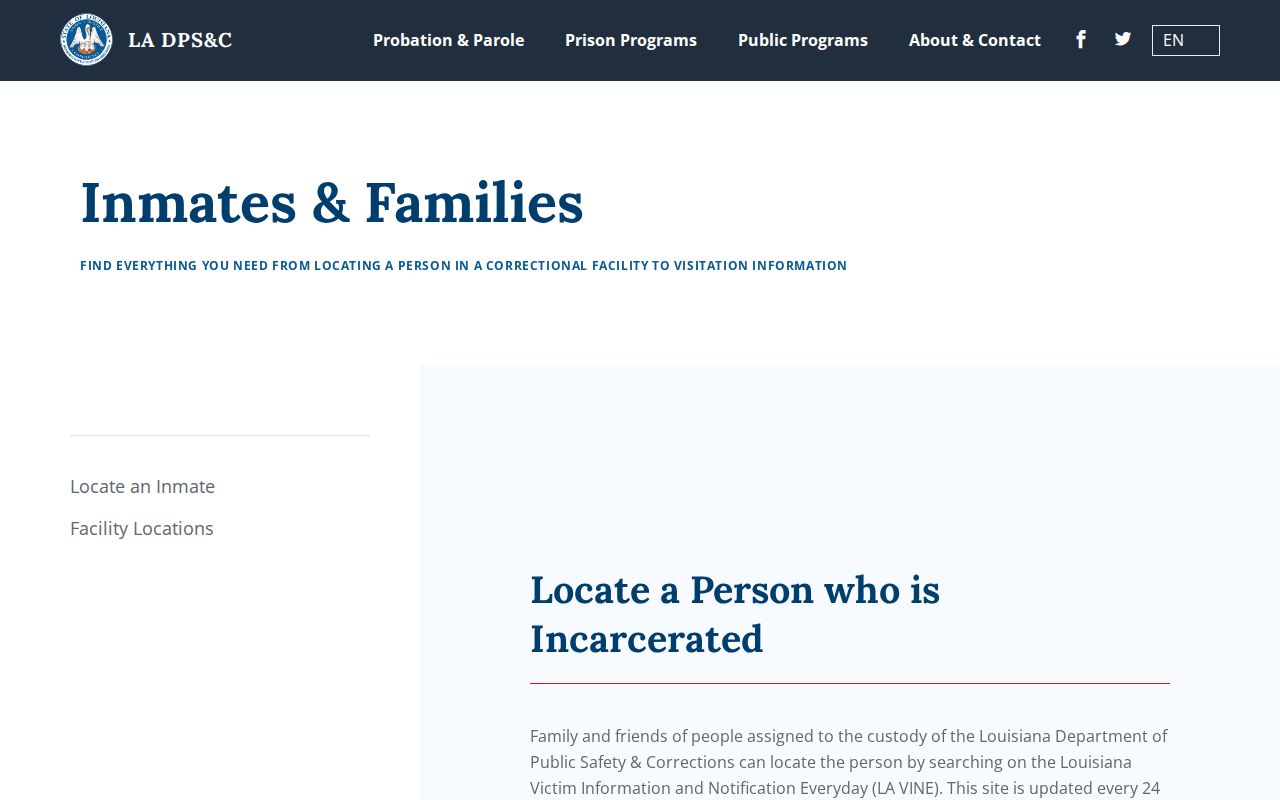
The locator uses identifying information, while VINE supports participating custody searches and event alerts. Delays can occur, so neither replaces a judgment or commitment document. DPS&C also publishes its facility and office directory.
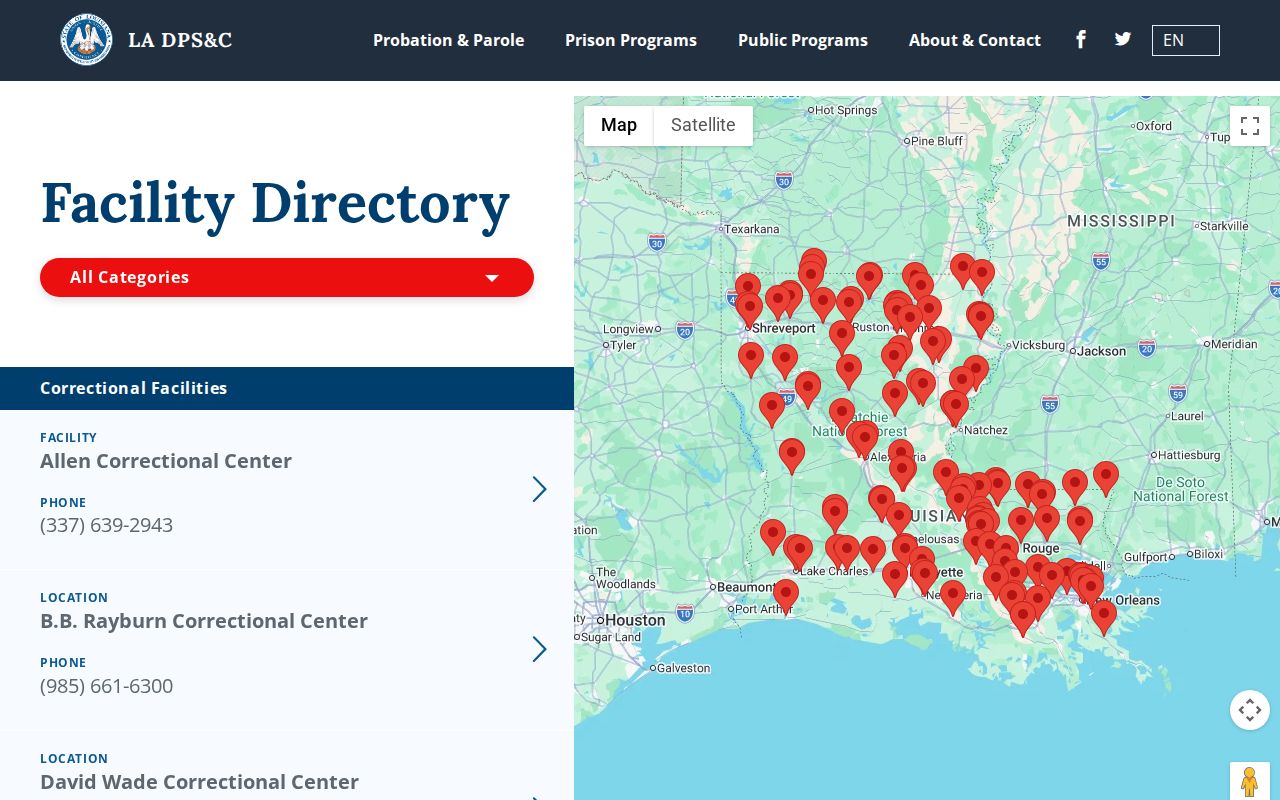
The directory lists eight state correctional facilities, alongside local placements and other corrections offices. For a booking jacket, return to the parish sheriff. For the sentence, use the court clerk.
Types of Criminal Records
Louisiana criminal records are defined as much by their creator as by their label. An arrest is an enforcement event, not proof of guilt. The filed case may use a different charge from the booking entry. A repository record can join an arrest cycle to a later outcome, but it carries less detail than the clerk’s file. Warrants, supervision files, registry entries, and custody notices each answer narrower questions.
- Arrest and booking records: created by police, sheriffs, and parish jails.
- Criminal court cases: held by judicial district, city, municipal, or other authorized courts.
- Repository records: compiled by LSP BCII from fingerprint and justice-agency reports.
- Warrants and capias entries: issued by courts and handled through official enforcement channels.
- Custody and supervision records: divided among parish, state, and federal systems.
- Registry records: published by LSP BCII from state and parish reporting.
Louisiana Warrant Records Require Parish Checks
Louisiana has no complete public statewide warrant search. LSP manages restricted LLETS connections to wanted-person and NCIC data, but that law-enforcement network is not a public portal. Public warrant information is scattered among parish sheriff channels, judicial district dockets, and city or municipal courts. A sealed warrant may not appear at all before execution.
Start with every Louisiana parish and court where a case may exist. Check official Louisiana sheriff and clerk sources, then call the specific warrant or court line to confirm status. A Louisiana web entry may lag after execution or recall. If a warrant appears tied to your own case, ask the issuing court or counsel about a safe, case-specific resolution. Never treat a blank Louisiana portal result as statewide clearance.
Note: A capias often follows a missed court event or supervision issue, but only the issuing court can explain its current status.
Louisiana Probation and Parole Records
Adult felony probation and parole supervision is state-run through the DPS&C Division of Probation and Parole. The division operates 21 district offices in four regions plus headquarters. The sentencing court imposes probation. The Committee on Parole considers release and publishes dockets or results, while state officers perform field supervision. Some city and specialty-court programs remain local, so no single public name database covers every Louisiana supervision file.
The DPS&C probation and community corrections resource shows how Louisiana organizes the state supervision system.
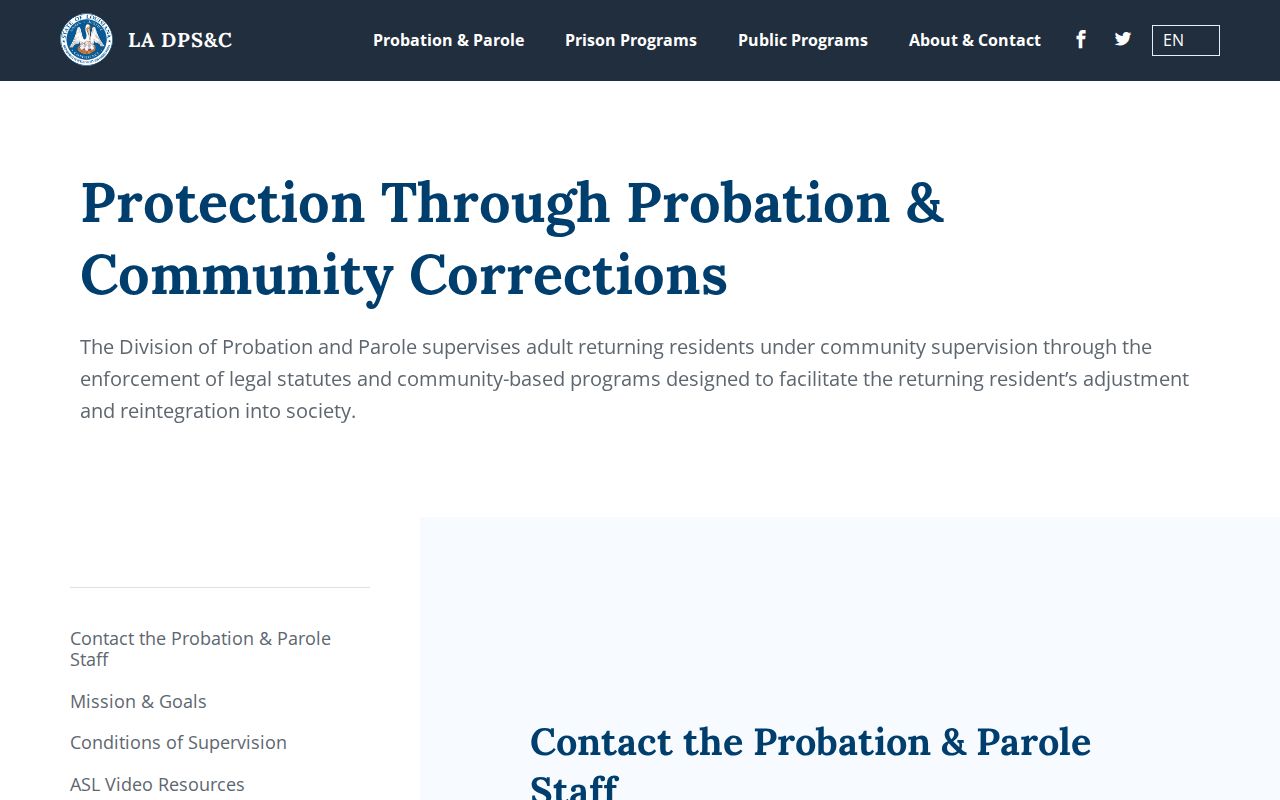
For status, first read the court’s sentence, then check DPS&C or VINE and contact the assigned district office. Public parole material is different from the confidential field-supervision file. The Louisiana parole dockets and decisions page publishes hearing material and results.
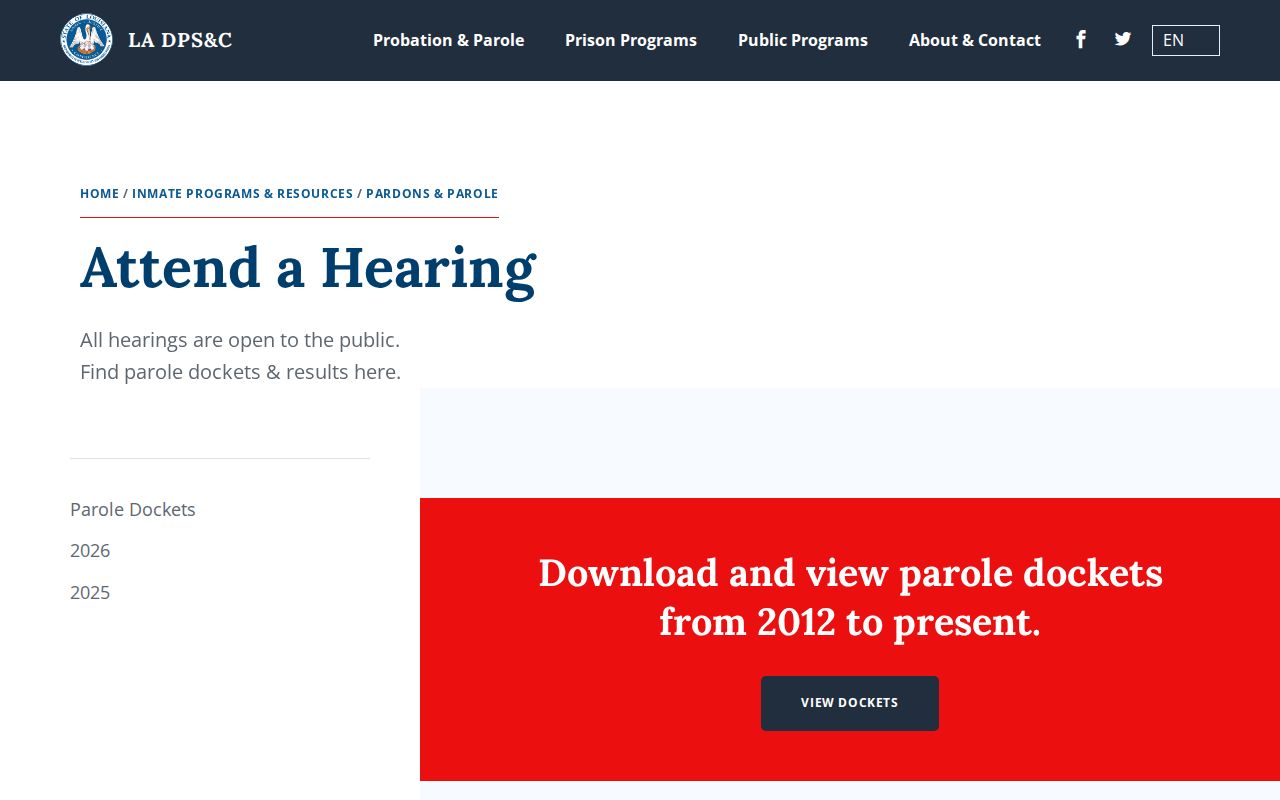
A docket shows that a matter is scheduled, not that release is assured. Confirm the final decision and current status through the proper state channel.
Louisiana Police Reports Stay Local
Louisiana has no statewide pool of local incident reports. Each Louisiana sheriff, municipal police department, campus agency, or other creator remains custodian of its own file. LSP holds reports created by Louisiana troopers and state units, not reports from every police department. Ask for a specific Louisiana initial report and any releasable supplements, with the event date, location, agency, report number, and named parties when known.
Crash records show this split clearly. The LSP crash report search and ordering service covers LSP-investigated crashes and can search by a person’s name, crash date, and parish, or by LSP report number.
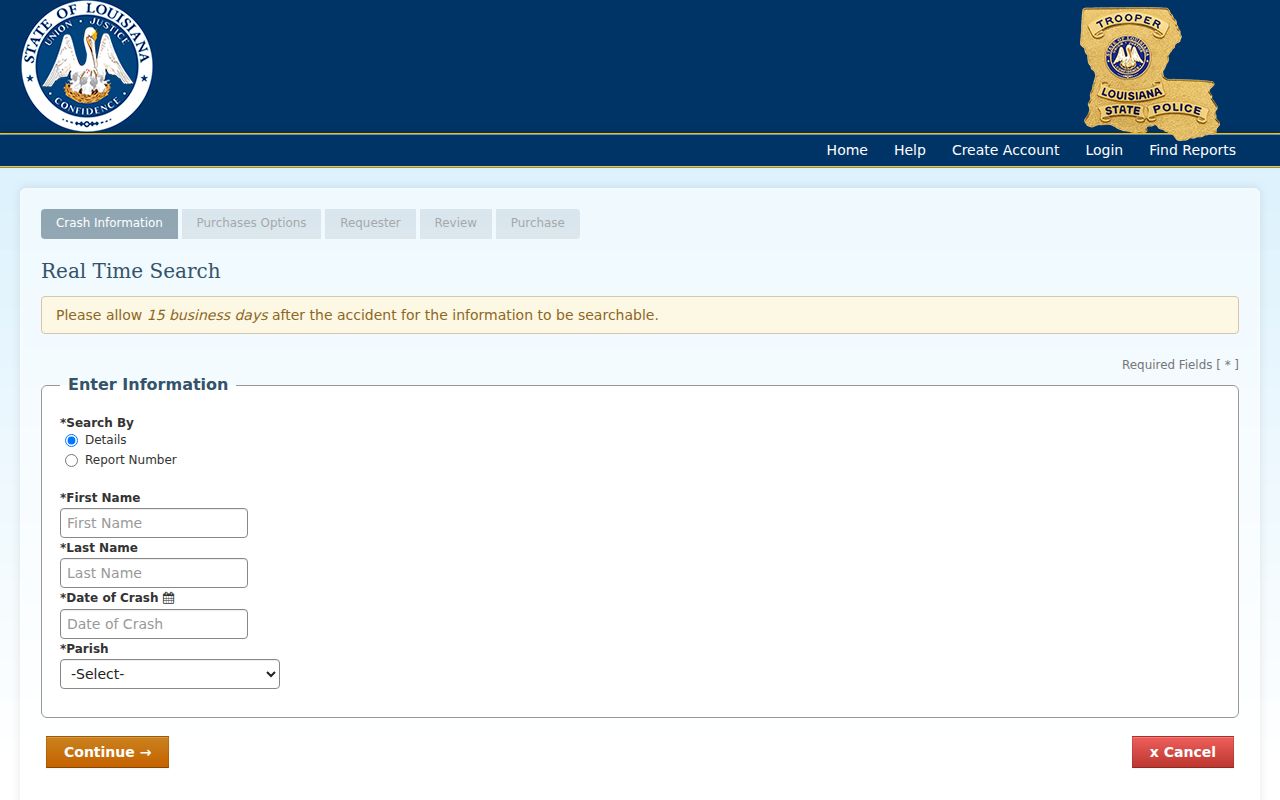
Local-agency crashes remain with that local agency. Active investigations, juveniles, victims, medical facts, security content, and personal identifiers may require redaction or withholding. If access is denied, ask for the cited exemption and whether segregated public portions can be released.
Louisiana Has No Felony Ladder
Louisiana does not use a broad Class A, B, or C ladder for every crime. Under R.S. 14:2, a felony is an offense that can bring death or imprisonment at hard labor. A misdemeanor is any other offense. The exact penalty comes from the individual offense statute and any lawful grade or enhancement. A booking label can also change after prosecutorial review.
Read three Louisiana sources together: the current statute, the filed charging instrument, and the final judgment. Louisiana Judicial District Courts hear felony prosecutions. Authorized Louisiana district, parish, city, municipal, or traffic courts may handle narrower lower-level matters. A label such as “FELONY” or “MISD” in one index does not supply the complete sentencing range or prove the final result.
Public Access Laws
Louisiana Public Records Law in Title 44 governs access to agency records, subject to specific exceptions. Courts and clerks apply judicial access rules to court files. BCII repository data follows a different dissemination law. This is why a public booking summary or filed charge can be available even when the compiled LACCH rap sheet is closed.
The official R.S. 44:31 public access provision appears in the captured Louisiana Legislature page below.
The Louisiana statute supplies a general right, while the related Louisiana provisions below define important record boundaries.
Key Louisiana laws:
R.S. 44:31 creates the general right to inspect or copy public records, subject to exceptions.
R.S. 44:3 protects specified investigative, juvenile, security, informant, and BCII material.
R.S. 15:587 controls criminal-history dissemination and blocks unrestricted public LACCH searching.
R.S. 15:588 gives a person the right to inspect their own state criminal-history record.
C.Cr.P. art. 973 explains expungement’s effect and continuing authorized access.
Louisiana Expungement Restricts Record Access
Louisiana expungement removes a qualifying record from public access. It does not destroy every copy or block access by every authorized justice agency. Eligibility depends on the offense, outcome, waiting period, exclusions, prior relief, and other statutory conditions. The filing belongs in the court record tied to the arrest or prosecution, ordinarily in the parish where the matter occurred.
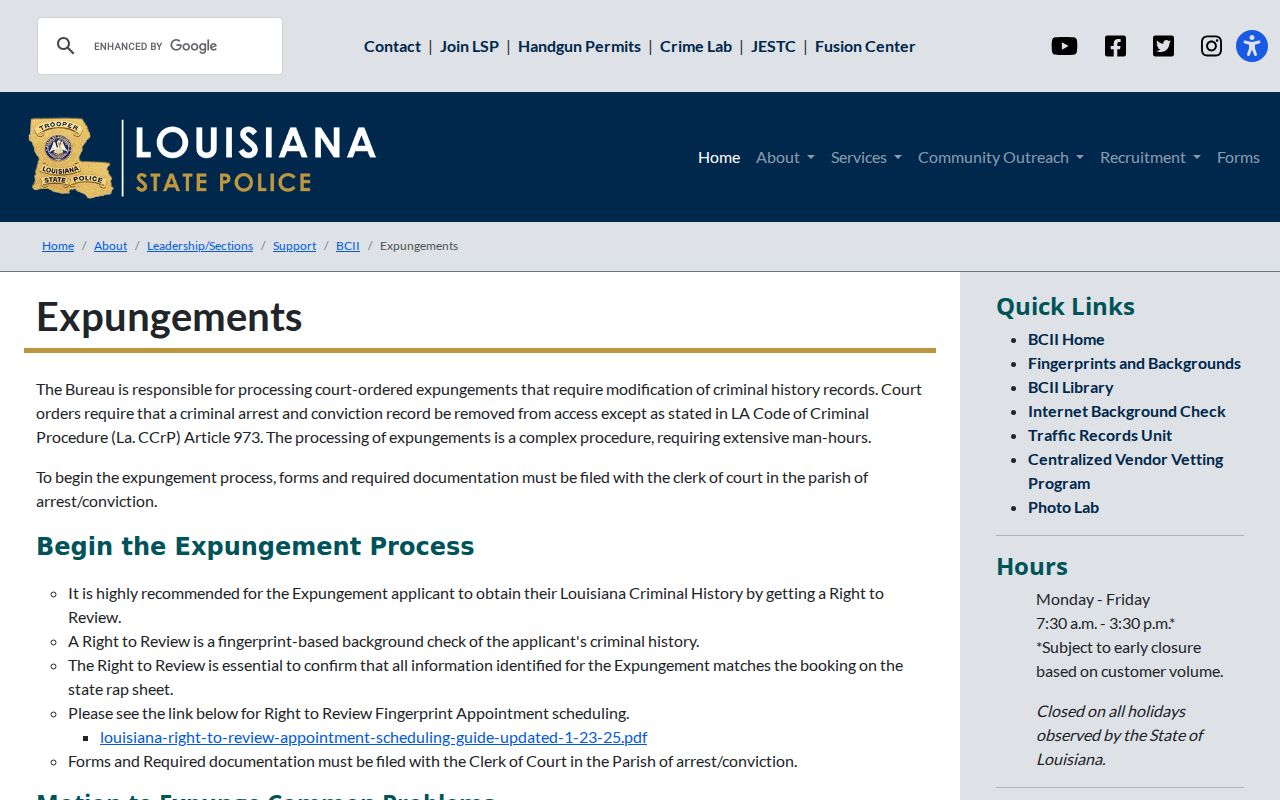
The LSP BCII expungement resource provides state processing instructions and agency information.
The signed Louisiana court order must reach the district attorney, arresting agency, parish sheriff, BCII, and other listed entities as required. After Louisiana processing, check both the parish public index and a later Right to Review. Louisiana also recognizes interim expungement and expungement by redaction in defined cases.
Recent reforms broadened some routes without creating universal automatic relief. Acts effective in 2024 addressed qualifying age-17 arrests, certain completed court programs, and multiple individually eligible felonies. A funding-dependent electronic process is authorized, but current public instructions still route ordinary applications through parish clerks.
Louisiana Criminal Record Fees Differ
Costs attach to separate products. They should not be combined into one advertised price. The current Right to Review form states a $31 state processing charge, plus the capture amount shown during IdentoGO scheduling. An older form showing $26 is stale. Parish searches, document images, certifications, fingerprint cards, and archive work can add local charges.
| Louisiana Record Item | Current Finding |
|---|---|
| BCII Right to Review | $31 state processing, plus the live IdentoGO capture amount |
| Authorized IBC state check | $31, consisting of $26 processing and a $5 technology fee |
| FBI Identity History Summary | $18, with fingerprint or approved-channeler costs separate |
| Louisiana expungement | Up to $550 in commonly applicable cases, with statutory waivers or reductions possible |
| Parish court or police copies | Varies by custodian, subscription, image, certification, and reproduction work |
Confirm the live amount and payment method before scheduling, filing, or traveling. A free index search is not a certified copy, and a subscription charge is not a court certification fee.
Find Criminal Records by County in Louisiana
Louisiana uses parishes, and each of its 64 parish sites routes readers to the local custodians who create arrests, bookings, incident reports, warrants, and case files. The eight most populous parishes below represent the state’s largest record systems. Their cards link to the matching parish homepages, where sheriff, jail, clerk, court, and local request details belong.
East Baton Rouge Parish
Baton Rouge · Capital-region sheriff and 19th Judicial District records
Jefferson Parish
Gretna · Major metro sheriff and 24th Judicial District records
Orleans Parish
New Orleans · Criminal District Court and city police records
St. Tammany Parish
Covington · Northshore sheriff and 22nd Judicial District records
Lafayette Parish
Lafayette · Acadiana sheriff and 15th Judicial District records
Caddo Parish
Shreveport · Northwest Louisiana sheriff and 1st Judicial District records
Calcasieu Parish
Lake Charles · Southwest Louisiana sheriff and 14th Judicial District records
Ouachita Parish
Monroe · Northeast Louisiana sheriff and 4th Judicial District records
Browse the full directory of all 64 Louisiana parishes to open the criminal records site for any parish.